Marketing Leader, Brand & Creative
The entire marketing funnel deserves creativity.
Brand and creative at Wieden+Kennedy and Swift for Adidas, Starbucks, Target, and Gatorade. Media budget, martech, and a customer data platform built in-house. I make sure both drive results.
CREATIVE PORTFOLIO
Click to review


SELECTED WORK
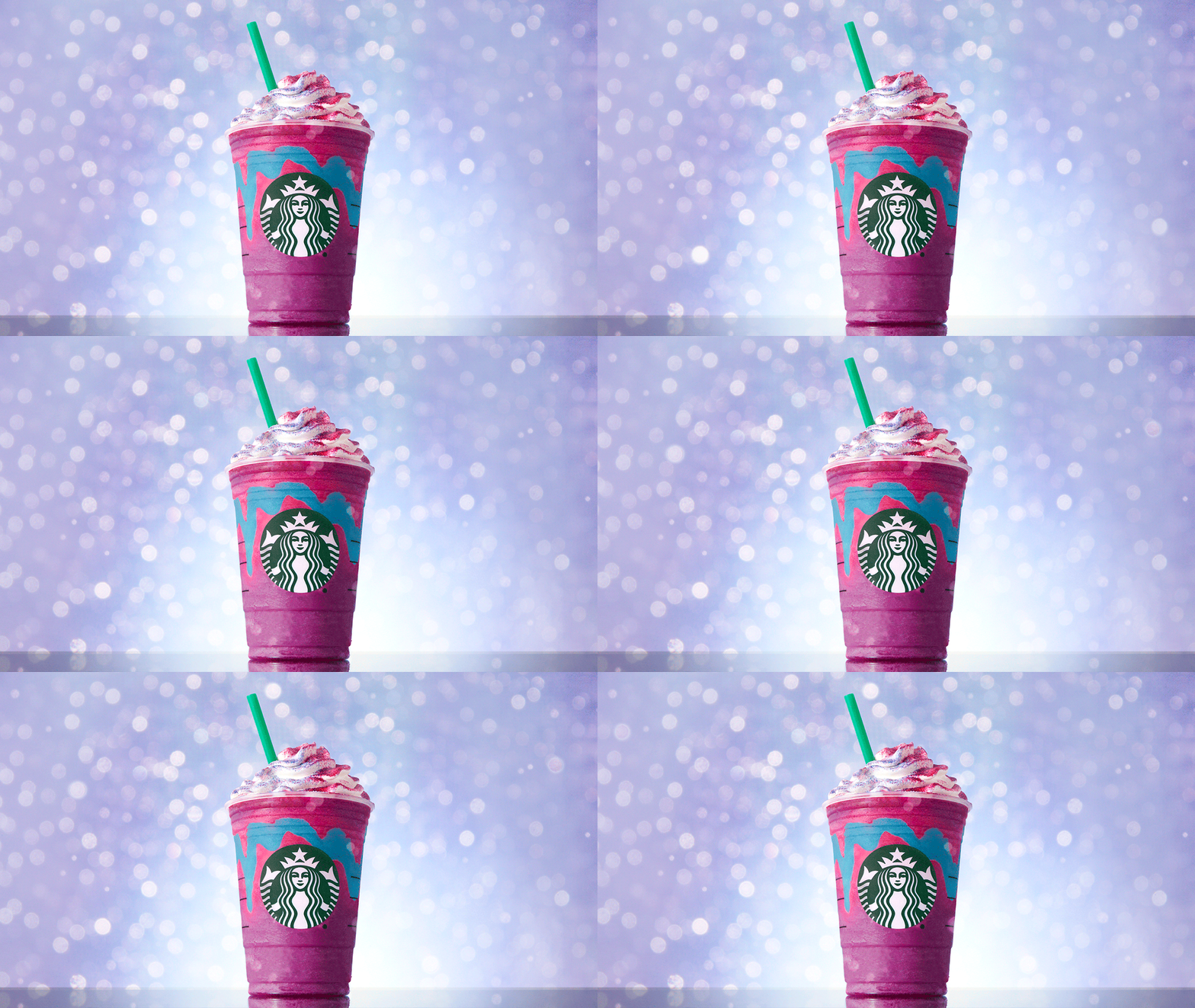
Starbucks Unicorn Frappuccino
Role: Swift Agency, Brand Director
CREATIVE · INSIGHT
Fan Flavors was a bracket-style contest pitting six secret-menu Frappuccino flavors against each other, with the winner going into production across 17,000 stores. It drew over 2 million votes in two weeks. But the real insight wasn't the winner. Caramel Cocoa Cluster won the vote, yet Cotton Candy outsold it and was the most-shared drink on Instagram: one in three people who bought it posted about it online. People voted for taste but bought for what looked magical in a photo.
My team took that insight to Starbucks' product group with a specific recommendation: build limited-time drinks engineered for visual impact. The result was the Unicorn Frappuccino, a color-changing drink built to be photographed, released as a five-day run in April 2017.
It generated roughly 155,000 to 180,000 Instagram posts in under a week, with customers acting as the entire media engine and no paid amplification behind it. Stores sold out early, and the drink pulled in new, younger customers Starbucks hadn't been reaching. Howard Schultz cited it on an earnings call as the company's most stunning example of understanding social and Instagram, and it won Marketing Dive's Mobile Campaign of the Year.
adidas / Project Harden
Role: Swift Agency, Brand Director
CREATIVE · INSIGHT
Adidas had signed James Harden but had no idea how to launch a signature shoe to Gen Z without just showing them the shoe. The instinct in the room was a traditional reveal campaign. Instead, we went to the audience first. Research interviews with teenagers turned up something nobody on the client side expected: kids were treating their Instagram grids like a canvas, tearing down and rebuilding nine-photo layouts to constantly re-present themselves. That behavior became the campaign. We built @ProjectHarden as an account that mirrored exactly that instinct, cryptic, unpredictable, rebuilding itself in public, and never showed the shoe until it dropped.
I led account and strategy on the launch; Pat McCaren, our Creative Director, led the creative execution.
The shoe sold out in 5 hours, the most successful basketball launch in adidas history at the time. Engagement on the account ran 2-3x above benchmark, cost per engagement came in 14% under target, and the campaign won a Clio, a Shorty, and a Rosey.

YouTube Music App Launch
Role: Swift Agency, Brand Director
CREATIVE · DATA
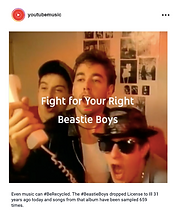
YouTube had more music than any streaming competitor and nobody thought of it as a music authority. The obvious move was to push people straight to the app store. The data said otherwise: seven months before launch, we noticed nearly 10x more traffic landing on YouTube Music's Instagram profile page than on any individual post. Instead of fighting that behavior, we built for it, a 36-tile takeover across the entire profile grid, each post linked to the next into one continuous visual timeline spanning the Beatles to Dua Lipa.
The app hit 10 million downloads in its first 90 days, took the #1 spot on both app store charts in several new markets, and the launch was covered by 135 media outlets in 16 countries.
Love on the Lot
Role: Dick Hannah, Head of Marketing
CREATIVE · ORIGINAL IP
Car buying has the worst reputation of any consumer category, and every dealership's marketing says some version of the same thing: friendly service, fair prices, no pressure. Nobody believes it, because everyone says it. The instinct in the room was another reassurance-driven spot. Instead, the idea was to borrow a genre nobody expects a car dealer to touch: reality dating show trailers, the hyper-condensed cuts, the out-of-context dialogue, the over-the-top music of "this season, on The Bachelor." The joke was the setup, looking for the right car is a lot like looking for the right partner on TV, chaos, secrets, and twists. The payoff undercuts it: Dick Hannah's actual answer is transparent pricing, straightforward people, and a guarantee that holds up after the sale. Same reassurance every competitor makes, told through a format built entirely to make people feel something other than reassured.
I led the concept and marketing direction, writing and directing by Eric Samsel, produced with John Waskey.
The campaign won Gold at the 2024 Telly Awards in Campaign-Branding, credited to Dick Hannah Dealerships with me named as Head of Marketing on the entry.
Customer Data Platform
Role: Dick Hannah, Head of Marketing
OPS · BUILD
When I started, the group's only marketing automation was Mailchimp, running so poorly we shut it off entirely rather than keep sending against it. That wasn't a martech problem, it was a data problem: eighteen brands with no unified customer record, nothing clean enough to build real marketing on top of.
IT led the fix at the foundation, bringing in Treasure Data and building canonical customer IDs across every brand, the unglamorous work of actually cleaning and unifying 250,000+ customer profiles. Once that data was trustworthy, I built the activation layer on top of it: HubSpot for email, Postgrid for direct mail, SalesMsg for SMS, unified for the first time under a single customer view instead of eighteen disconnected systems.
The team built the data out into automated customer journeys, Lost Service Customer, Declined Service, Service to Sales, Sales APR Improvement, targeting the right customer with the right message based on actual behavior instead of a blanket send. The results showed up in deliverability first: email delivery rate climbed from 39.61% in April to 83.53% in July, while soft bounce rate dropped from 59.86% to 15.44% over the same period, as clean, unified data replaced the old fragmented lists. Those journeys are now a leading driver of email-attributed service and sales revenue across the group.

Most marketers talk about AI. I built something with it.
Orygin is a working AI-powered marketing audit product, live, taking real clients, engineered end to end rather than assembled from off-the-shelf tools. I designed the product architecture myself: a two-tier audit model with a structured scoring rubric underneath it, so the output is consistent and defensible rather than a generic AI summary dressed up as analysis.
Underneath the product is a real pipeline, not a demo. Tally handles intake, Stripe handles payment verification, Google Cloud APIs and the Anthropic Claude API do the actual analysis, and the whole sequence, from a client submitting their information to a finished audit landing in their inbox, runs through an automation pipeline I built in Make.com. No manual handoffs, no person sitting in the middle moving things along.
The reason I built it wasn't to have an AI product to point to. It was to actually understand, hands-on, what it takes to apply LLM analysis to a real business problem: how to structure a prompt so it produces expert-grade output instead of generic filler, where AI genuinely replaces expensive expertise and where it doesn't, what breaks when you try to automate judgment instead of just automating tasks. That's the difference between having used AI tools and having built with them.
Orygin is live at oryginco.com.

Matt Berry, MBA
